Saturday, November 02, 2024

The "Ashta Lakshmi Framework": Why Every CXO Role Is Essential for True Organizational Wealth

In business, wealth is often linked solely to financial gains, but as I learned during Lakshmi Pujan this Diwali, true wealth encompasses so much more. Lakshmi, the goddess of prosperity, is celebrated in her eight forms—known as the Ashta Lakshmi—each representing a unique aspect of abundance that contributes to holistic success. Just as each form of Lakshmi sustains and nurtures growth, each CXO role within an organization aligns with these aspects, supporting a balanced approach to sustainability and success. 

Introducing 'The Ashta Lakshmi Framework'

There is a lot to learn from this Ashta Lakshmi framework. For eg my biggest takeaway is that top talent—which can generate up to 400% more revenue than average talent—highlights the need for a Chief Talent Officer (CTO) to nurture and manage this valuable asset. I will detail this need and my learning below in this blog. This Ashta Lakshmi Framework helps us understand how each CXO role aligns with an essential aspect of growth, prosperity, and resilience within an organization.

The Ashta Lakshmi Framework for Corporate Structure

Let’s explore how each form of Lakshmi aligns with a specific CXO role, providing a comprehensive approach to organizational success.


1. Aadi Lakshmi (Primordial Wealth) - CEO and CTO

  • Aadi Lakshmi represents primordial energy, the core essence that sustains all.
  • CEO: As the visionary and guiding force, the CEO sets the DNA of the organization. Their thoughts and principles lay the foundation, shaping the mission, purpose, and culture.
  • CTO: Technology is today’s essential backbone, much like Aadi Lakshmi’s sustaining energy. With data as the new oil, the CTO ensures the technological infrastructure supports data-driven decisions and innovation, essential for the organization’s core success.

Organizational Focus: Foundational purpose and core technology, sustaining and driving all operations.


2. Dhana Lakshmi (Wealth) - Chief Financial Officer (CFO)

  • Dhana Lakshmi governs material wealth, financial stability, and prudent management.
  • CFO: Like Dhana Lakshmi, the CFO is responsible for ensuring financial health. This role involves resource management, budgeting, and strategic investments that support the organization’s long-term stability and growth.

Organizational Focus: Financial stability, resource management, and strategic investment for sustainable prosperity.


3. Dhanya Lakshmi (Nourishment and Health) - Chief Human Resources Officer (CHRO)

  • Dhanya Lakshmi symbolizes nourishment and well-being.
  • CHRO: This role nurtures and supports the organization’s people, creating a healthy work environment that sustains productivity and morale. Just as Dhanya Lakshmi provides nourishment, the CHRO ensures employee well-being, diversity, and engagement.

Organizational Focus: People, culture, and well-being, essential to sustaining a motivated workforce.


4. Gaja Lakshmi (Authority and Prestige) - Head of Corporate Communications / Chief Marketing Officer (CMO)

  • Gaja Lakshmi embodies authority, prestige, and reputation.
  • Head of Corporate Communications / CMO: Responsible for the organization’s brand and reputation, this role ensures that the company is viewed as an authority in its field, with a strong, credible image in the market.

Organizational Focus: Brand authority, reputation, and external influence, ensuring respect and market presence.


5. Santana Lakshmi (Progeny and Continuity) - Chief Talent Officer (CTO)

  • Santana Lakshmi represents continuity and future growth.
  • Chief Talent Officer: Top talent can produce up to 400% more revenue than average talent, making it essential to have a dedicated Chief Talent Officer. This role focuses on succession planning, ensuring that high-potential employees are developed and prepared to lead, sustaining the organization’s growth and innovation.

Organizational Focus: Succession planning, talent management, and leadership pipeline, supporting long-term continuity.


6.

Veera Lakshmi (Valor) - Chief Risk Officer (CRO)

  • Veera Lakshmi represents courage and resilience.
  • CRO: This role provides the organization with the courage to face risks and uncertainty. By identifying and mitigating risks, the CRO enables the organization to remain resilient in the face of adversity, allowing it to thrive even in challenging environments.

Organizational Focus: Risk management, resilience, and crisis readiness, protecting the organization’s long-term stability.


7. Vijaya Lakshmi (Victory) - Chief Operating Officer (COO)

  • Vijaya Lakshmi embodies victory and success through the removal of obstacles.
  • COO: The COO’s role is to streamline operations, ensuring that processes are efficient and barriers to success are minimized. Efficient operations remove obstacles, driving productivity and creating an environment where the organization can achieve its objectives smoothly.

Organizational Focus: Operational efficiency, process optimization, and productivity, enabling unobstructed success.


8. Vidya Lakshmi (Knowledge) - Chief Learning Officer (CLO)

  • Vidya Lakshmi symbolizes knowledge and intellectual growth.
  • CLO: Responsible for fostering a culture of learning, the CLO ensures that employees have the skills and knowledge to adapt to changes and remain competitive. This role supports intellectual growth, making the organization adaptable and future-ready.

Organizational Focus: Learning, development, and adaptability, creating a culture of continuous intellectual growth.


Key Insights for CEOs and CXOs

The Ashta Lakshmi framework provides a holistic view of organizational roles, encouraging leaders to approach growth with balance and purpose. Here are the key takeaways:

  1. Balanced, Multi-Dimensional Growth

    • True prosperity requires nurturing all dimensions of growth—financial health, operational efficiency, innovation, resilience, and people development.
  2. The Essential Role of a Chief Talent Officer

    • With top talent generating up to 400% more revenue than average, having a dedicated Chief Talent Officer is essential. This role manages talent succession, ensuring a steady pipeline of skilled leaders who drive the organization’s growth and continuity.
  3. Identifying and Addressing Organizational Gaps

    • Examining each form of Lakshmi helps CEOs and CXOs identify areas that may need more attention. Whether in resilience, brand reputation, or knowledge development, addressing these areas ensures a balanced and resilient organization.
  4. A Values-Driven Approach to Leadership

    • The Ashta Lakshmi framework emphasizes virtues like resilience, ethical wealth creation, and continuous learning. By embodying these values, CXOs can lead with purpose, creating an organization that is profitable, sustainable, and respected.

A Timeless Blueprint for Sustained Success

The Ashta Lakshmi Stotra offers a timeless framework for structuring organizations in a way that promotes balanced and sustainable success. By aligning each form of Lakshmi with a CXO role, we see that wealth encompasses not only money but also health, resilience, reputation, and knowledge. Each role, from the CEO to the CLO, contributes to a holistic vision of growth, creating a well-rounded organization ready to face any challenge.

This Ashta Lakshmi Framework is more than just an organizational structure—it’s a philosophy that encourages CEOs and CXOs to lead with vision, balance, and resilience. When every form of wealth is nurtured, the organization thrives, adapts, and sustains its success over the long term, embodying the enduring wisdom of the Ashta Lakshmi Stotra.

Wednesday, October 16, 2024

What HR can learn from the periodic table!

Imagine for a moment that you are a leader in a busy corporate world, where your team is your engine of success. Now, picture your team as an atom. Small, agile, and full of energy. Each team member, like a proton or neutron, plays a vital role in holding everything together. It’s a delicate balance. But what happens when you add more people—more "particles"—to this atomic team?
Meet Raj, a manager at a fast-growing tech company. Raj was known for getting things done. His team was sharp, small, and successful. But as his company grew, so did the demands on his team. They started adding more people to the mix—first one, then another, and soon Raj had a team twice its original size.

At first, everything seemed fine. But over time, Raj noticed something was off. Communication wasn’t as seamless as before. Meetings that used to take 30 minutes now stretched into hours, and projects that once breezed to completion seemed to drag endlessly. Team members started pulling away, disengaging—some even left. His once-powerful, high-performing team was suddenly falling apart. It had become radioactive.

The Critical Mass Problem

You see, just like in nature, there’s a limit to how large a team—or an atom—can grow before it becomes unstable. If an atom’s nucleus gets too big, it becomes radioactive and starts shedding particles to find stability. Raj's team had hit its critical mass. It was too large to manage effectively, and just like that unstable nucleus, it began to decay.

Raj had a problem on his hands. The solution wasn’t to simply add more people or cut everyone loose. He needed balance. He needed the right combination of talents, not just more bodies.

The Sodium-Chlorine Solution

As Raj sat in a meeting, trying to figure out how to get his team back on track, he remembered something he’d learned in school. Sodium, on its own, is highly reactive—dangerous, even. Chlorine, too, is toxic. But when these two elements come together, they form something stable and essential: salt. It struck him—this was exactly what he needed for his team.

Raj realized that his team, like elements in nature, needed diversity in skills and perspectives to create something greater than the sum of its parts. Sure, sodium and chlorine are powerful on their own, but together, they become something entirely new—something life-sustaining. This was the kind of synergy Raj needed to recreate within his team.

The Power of Reactiveness

With this newfound clarity, Raj approached his team differently. He encouraged them to embrace their differences, to share their ideas—no matter how "reactive" they seemed. In the right environment, even the most volatile ideas could spark innovation. Raj knew that in the same way reactive elements come together to create new compounds, his team’s varied perspectives could lead to breakthroughs, if harnessed properly.

It wasn’t about avoiding conflict or disagreement. It was about channeling that energy into something productive, just as chemistry does when elements combine to form powerful compounds.

Structure Saves the Day

As Raj brought his team back from the brink, he also realized something crucial: every successful structure needs a foundation. Just like the periodic table organizes elements into groups with similar properties, his team needed structure to thrive. He made sure each member had a clear role and knew how they contributed to the bigger picture. This clarity helped his team come together, just like atoms falling into orderly patterns.

Raj's team didn’t just survive—it thrived. Projects were back on track, communication improved, and his team felt energized again. They had found their balance, much like a stable atom, and the chaotic days of “radioactive decay” were behind them.

The Chemistry of Teams

In the end, Raj learned that building a high-performing team is much like balancing the elements in an atom. Too big, and things fall apart. Too reactive, and you risk chaos. But with the right combination of people and roles, something extraordinary happens—your team becomes stable, dynamic, and innovative.

So, the next time you think about your team, remember Raj’s journey. Teams, like atoms, need balance and the right combination of skills to succeed. Don’t let your team grow too large or let their differences go unrecognized. Find that critical mass, nurture diversity, and watch as your team transforms into something greater than the sum of its parts.


Saturday, February 10, 2024

The Economics of the Present Moment

I have some thoughts around the economics of the present moment. We spend money either to take care of our necessities or it is to experience the present moment. 


Allow me to illustrate this with examples.  Food, shelter and clothing are necessities of our lives if you can do away with a cheaper jeans. But why do people go for Armani and Gucci? Because they look good. It boosts their ego, they feel pampered, they feel nice about themselves and then in that state if you closely observe mind is completely in that moment. Then mind is not pondering on past or worried about future. That high state of awareness brings mind in that present moment. 

Similarly for food, we can spend money on simple dal chawal. But what drives the restaurant business? It's present moment. When people come there, Experience the ambience the delicious food, mind goes in a 'wow' expression. That's when we experience present moment. Yes we do chit chat talk about the past and the future, but that blissful state happens when you say Wow! And mind comes to present moment.

I often wondered why do we spend money. And my conclusion is that it is to experience the present moment. Let me explain this with another example. After doing in depth analysis of the past data and drawing future projections, mind gets tired at work. After that when you come home and fix yourself your favourite drink, sit on a cozy balcony chair that faces the sea. Cool breeze is brushing your face and your favourite music is being played around. You go in that wow feeling. At that moment, if you notice, your mind is completely in present moment. So to buy a sea facing apartment and spending money on such luxuries simply enables mind to come in present moment. 

The entire economy runs to bring people in this moment. And then every mind is different. Some find their present moment in a concert, some find it in a thrilling ride, some find it on the mountain top while some find it while some find it while renting a sleek black Mercedes. 

Why do we spend on a movie? Some would say for entertainment. But what does entertainment do to you? When you are charged with all those emotions that the movie is triggering in you, you feel alive. Whether it's thrill, horror, comedy, drama you are hooked on. In that moment you are not thinking about the grocery list that you have to buy. You are fully engrossed in that moment. So you might feel that you are spending on your friend's birthday cake so that he or she would be happy. But you are really spending that money so that your friend experiences that present moment. Imagine while cutting cake the friend is thinking about yesterday's exams. Would you still consider it as money well spent?

Yes there are certain essential things where you have to spend money. Like basic food, clothing, shelter, education, travel etc . They need not necessarily bring you to the present moment. But apart from these necessities, all of the money spent is to experience the present moment. 

Now imagine you are in present moment all the time. You wouldn't need money at all. You would use all your money in only bringing others to the present moment.

What are your thoughts on this? Whether you agree or disagree, I would love to hear from you. Please do comment. 

Tuesday, January 02, 2024

Understanding the Depths of Karma: A Reflection on Life's Unseen Forces

In the vast tapestry of life, we often find ourselves perplexed by the age-old question: "Why do good things happen to bad people, and bad things to good people?" This query haunts the corridors of our collective consciousness, often leaving us in a state of bewilderment. But is our perspective too narrow, limited only to what is visible on the surface?

The Surface vs. The Depth

It's easy to fall into the trap of judging based on what is readily apparent. News channels and social media paint a picture of people's lives that is far from complete. We see only a facet, a single angle of a multi-dimensional existence. This simplistic view fuels our confusion and sometimes, our frustration. 

However, the concept of karma, as explained in the Bhagavad Gita by Lord Krishna, offers a profound understanding. "Gahana Karmano Gatihi" – the depth of karma is inscrutable. It is not just a tally of good and bad deeds but a complex interplay of actions and consequences, often spanning lifetimes.

Karma in Everyday Life

Consider this: in your mid-40s, you might find yourself grappling with a deep-seated fear – perhaps of heights, insects, or social interactions. Psychologists often trace these fears back to childhood events. A public humiliation or a traumatic experience, though long passed, continues to influence your behavior decades later. This is karma in action – the lingering effects of past actions shaping your current reality.

The Story of Dhritarashtra and Lord Krishna

A story I once read on Quora beautifully illustrates this concept. I don't know how far is it true, but certainly gives us an idea of how deep is our Karmic journey. 
Dhritarashtra, after losing his 100 sons in the Mahabharata war, questioned Lord Krishna about his past deeds that led to such a tragic fate. Krishna revealed that in a past life, as a hunter, Dhritarashtra had killed 100 birds living in a tree he burnt down. The repercussion of that action unfolded over 50 lifetimes, culminating in the loss he faced as a king. Dhritarashtra asked Lord Krishna, "Why did I have to experience something that I did 50 lifetimes ago?" To this Lord Krishna explained that "You had to collect good karma for 50 lifetimes to be able to become a king and a father of 100 children."

This story encapsulates the essence of karma – it's a currency, a balance of deeds that spans over lifetimes. Good deeds accumulate, elevating one's soul to new experiences, while the debts of bad deeds must eventually be repaid.

Embracing Karma in Our Lives

So, what does this mean for us? It's a call to look beyond the immediate, to understand that each individual's journey is a complex interplay of actions, reactions, and unseen forces. Rather than dwelling on the perceived injustices of life, we can find peace in accepting these events as part of our karmic evolution.

Karma is not just a philosophical concept; it's a reality that permeates every aspect of our existence. It reminds us that our actions, however small, have consequences that ripple through time. In understanding and accepting the depths of karma, we free ourselves from the burden of judgment and open our hearts to the wisdom of life's mysterious ways.

Tuesday, October 31, 2023

Is AI necessary?


The Necessity of AI: Why Asking 'Why?' Is So Last Decade"Often, in the midst of my daily conversations, I'm presented with the timeless question, "Is learning about AI really that important?" To which I fondly reply, "Well, wasn't the mobile phone just a fad once?"You see, every transformative technology of our times has been greeted first with skepticism. Remember when we'd scoff at the idea of needing a mobile phone everywhere? Today, it's practically our third hand. The rise of social networking was no different. "What’s the need for Facebook when we have Orkut?" they said. Look at us now, unable to imagine life without sending a quick WhatsApp message.Then came the era of the digital wallet. “Why should we adopt this?” was the question. I can still hear echoes of impassioned politicians exclaiming, "Why Paytm karo?" Yet, here we are, in a world where I once traveled to another city, completely forgot my wallet, and guess what? I didn’t miss it for a second. From purchasing a humble bouquet worth 10 Rs at a traffic signal via GPay to ordering a coffee on the go, digital wallets are now an extension of our lifestyle.So, as we stand at the precipice of the AI revolution, why do we ask the same skeptical questions? Today's AI, especially marvels like ChatGpt, isn’t just another tech fad. It's like having a secretary, a friend, an advisor, a content creator, and so much more, all rolled into one. The best part? It's freely accessible to anyone and everyone.For those who recognized the potential of digital wallets early on, they rode the wave to immense success. Similarly, if you're reading this and know what ChatGpt is, count yourself among the lucky ones. You have an edge. You're poised to be a part of a transformative wave that will reshape our world as we know it.In conclusion, learning about AI isn't just important; it's imperative. The world is changing at breakneck speed, and to quote a popular saying, "The best way to predict the future is to invent it." Let's be a part of this invention rather than spectators. It’s time to embrace AI, because trust me, you don’t want to be the one asking 'Why?' a decade from now.

Monday, October 30, 2023

The Evolution of Creativity: From Twigs to AI

The rapid advancement of artificial intelligence, exemplified by tools like ChatGPT, has ignited debates about its impact on human originality and creativity. History offers us parallels. Rewind to the Stone Age, when early humans used twigs to etch their stories onto cave walls. The introduction of the paintbrush must have been a revolution. But with every innovation comes skepticism. Just as the paintbrush was once new, there might have been voices fearing the loss of the delicate art of twig painting. Would this new tool strip away our innate creativity?

The answer, as history shows, is no. While the twig might have been left behind, the paintbrush propelled human expression to new heights. The tool changed, but the essence of creativity remained untouched. Similarly, AI is not here to replace human ingenuity; it's here to augment it. It can draft blogs, compose poems, design art pieces, and even spruce up your resume. But the foundation of all these tasks remains your unique ideas. Think of AI as a tailor, taking your raw thoughts and fitting them into a more refined outfit.Everyone, at some point, faces the daunting wall of writer's block. AI can be the gentle nudge that helps us scale that wall, allowing our ideas to flow more freely and prolifically. 

It's not a replacement but a companion—an intelligent friend, a diligent colleague, a meticulous secretary. AI exists to amplify our capabilities, not diminish them. Embrace it as a tool for the future, just as our ancestors embraced the paintbrush all those years ago.

Tuesday, September 12, 2023

Decoding 'Unconditional Love'


#MyTakeaway 

When there is no freedom, love is stifling.

The need for freedom is sometimes from external source, and sometimes from within. Sometimes we get caught up in our own expectations. We have certain preset ideas and principles about certain relationships. They limit our experience of love. Dropping expectations, being open to all possibilities enables us to overcome the internal struggle to experience freedom. 

Lack of freedom also leads to feverishness. We communicate this feverishness through our vibes. And going by Newton's law, similar reaction stems from people around us stifling us more. This viscous circle of negativity doesn't allow love to blossom.

I am guessing the key here is to let go. Give freedom to others and be free from within too. 

Jai Gurudev 

Thursday, July 27, 2023

A Desire to get rid of all the Desires


#MyTakeaway 

This line brought a 'wow' effect in me, because it helped me understand the nature of desires. 

Whether it's good to have desires or not is completely upto us. We should just understand the nature of desires. What it does to us! It's a feeling that 'Present is not alright' it is a feeling that takes you away from the present moment into the future. When we know joy is right in the present moment, it's worth pondering do desires really bring joy? Or they create an illusion of joy. 

Yes, I agree that desires bring a motion. They give a direction. The world moves ahead because there is a desire to get up from the bed. None of the achievements would have been possible had it not been for the desires. But then it's important to become aware of what desires do to us. How long do we wish to stay in those emotions of unhappiness, anxiety etc? What is the return on that investment? Is it worth it? 

Gurudev says all of this can be achieved without desires as well. Just keep an intention. Intention is desire minus the feverishness attached to it. Intention helps us move forward, we get a direction. And yet it doesn't pull us away from the present moment.

Desires happen naturally. I don't think we can avoid them. But however, just becoming aware of the nature of desires, will help us bring down the negative effect it has on us.

Jai Gurudev! 

Thursday, July 20, 2023

Living Inside a Living Organism

It was our last leg of the honeymoon. We were standing on the top of Baiyoke Tower. It is the tallest man made structure we have ever been to. Meaning it is the highest urban place we have ever visited. From there we could see the entire Bangkok. 

I gazed into this amazing maze of concrete jungle separated by thin tar lines upon which flowed the golden river. The golden river was essentially the headlights of cars in line zipping past rapidly over the state of the art roads in the city. From this height it actually looked like molten gold flowing through the city.

I pondered what if this is the blood of the city. At granular level, the cars are the cells (like the RBCs). The driver of the car is the nucleus driving the cell. This car is headed towards some building. All these urban structures are like organs on the body. The roads are like veins that facilitate this flow of blood. In these organs some of the cell material gets offloaded while some gets loaded. 

Sometimes these roads lead to some dumping ground which can be the colon and the rectum. The dumping ground is the anus. 

All of this makes the city a living organisms. An epiphany was striking me. We are all Living inside a living organism. This organism is growing in size. It heals itself, it destroys itself just like we heal and harn our own body. 

The mayor's office can very well be the brain or this organism. So each urban structure has a specific purpose. Just like every organ has its own specific purpose. 

No wonder ancient people had appointed a gram devata. It was a God for every village / city that takes care of that place. I felt that this gram devata is nothing but the collective consciousness of the people living in this city, that makes this organism. 

The idea that we are living in an organism may sound ridiculous, but it is nevertheless fascinating. I bet the bacteria living in our gut finds it fascinating to know that s/he is living in an organism. For the the gut is their world. 

Now allow me to take this ridiculousness to next level. This one organism is connected to another organism through a similar vein like structure. So all these organism are essentially the part of a much bigger organism. So in retrospect the whole nation is one organism. And to pull the concept further the whole world is one big organism. 

Gurudev Sri Sri Ravi Shankar ji once said that the world is one organism. Only life can support life. Maybe we aren't sensitive enough to fathom the living nature of this supposedly non living object. 

Now today I read a blog where this person was pulling the concept further. Imagine the sun is the nucleus and the whole solar system is just a cell that belongs to this organism that we call as The Universe.

Now have you ever wondered what God can be? 

Wednesday, July 12, 2023

Nurturing Growth Through Mindful Choices

Nurturing Growth Through Mindful Choices

Embarking on personal yoga has shown me the value of investing in well-being. While some expect yoga to be free, allocating resources to our health and happiness is crucial. Our investments determine the returns we receive. Investing in junk food leads to unhealthy outcomes, while investing in positive aspects like health and education nurtures personal growth. 

Money acts as a catalyst for growth and shouldn't be mistaken as an indication of growth. 

Growth lies in how we invest our time, money and effort. By investing in skills and well-being, we unlock career growth, happiness, and even fame. Reinvesting our resources into positive endeavors allows positivity to flourish. 

Without financial investment, our growth relies solely on time and effort, slowing its speed. 

By making mindful choices and investing in our well-being, we cultivate a cycle of growth and positivity in our lives.

Tuesday, July 11, 2023

How to Stumble into Infinity?


#MyTakeaway 

Let's say you are a scientist. You have a bunch of equipments that you need for your research. Would you allow any Tom, Dick and Harry to be around the equipment? You would care for those equipments more than you care your toothbrush right? 

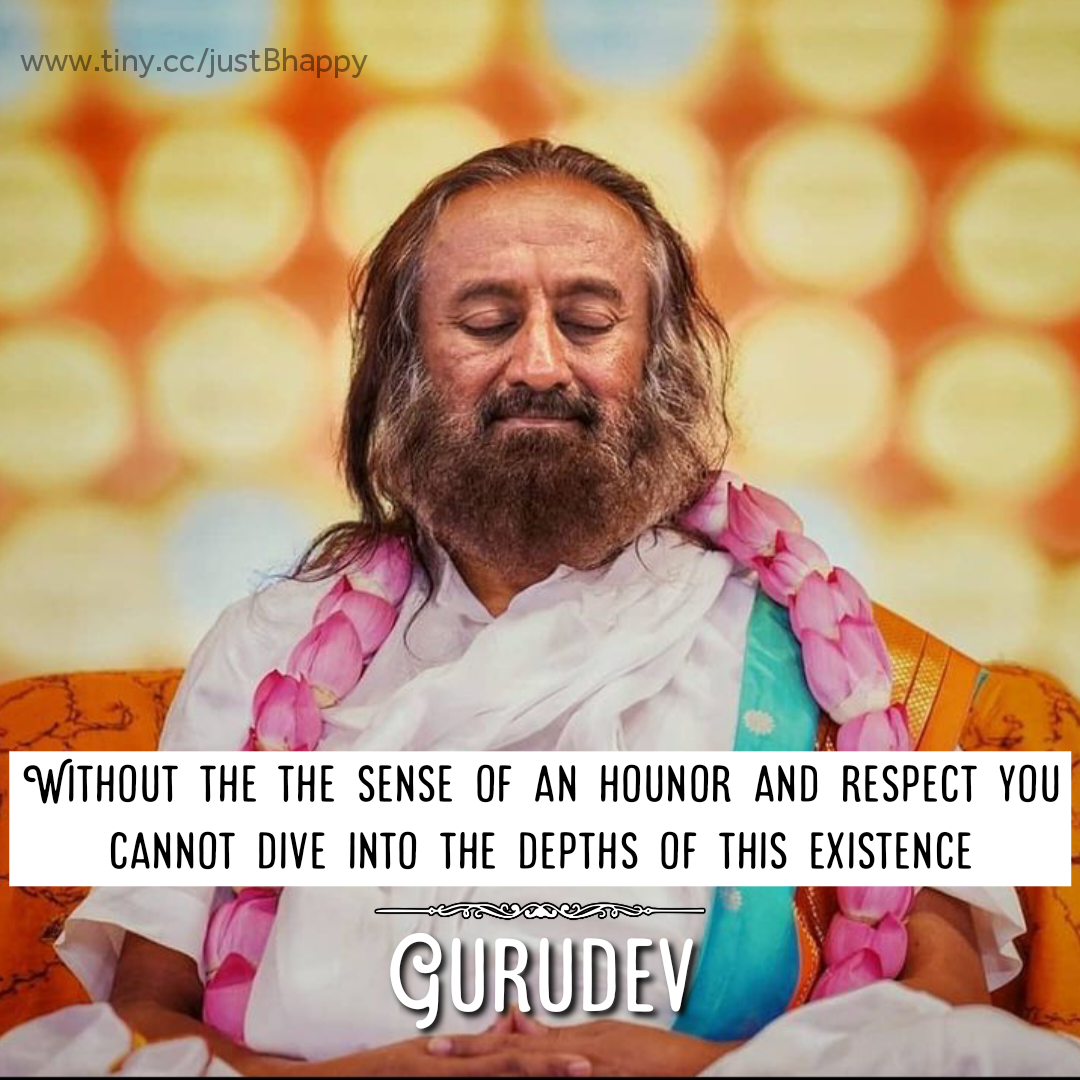
In India we tend to worship all such equipments. The idea is to create the sense of sacredness around our work objects. Wherever there is sacredness there is honour and respect. Whatever you respect you care for it more. This feeling allows you to dive deeper into whatever you are doing. 

More than the rituals behind the worshiping, it's important to understand the reason behind those rituals. Otherwise even rituals can become a mere checkbox and not bring in the sense of honour, respect and gratitude. You need not do puja in traditional manner. Even if you do anything that honours your study and work material, you will still be able to dive deeper into your own work, allowing you to create better results. 

When you respect your elders, you take care of them with all your heart and then that helps you take better care of them. It allows you to go deeper into their needs. When you take care of them just because you have to, the quality of that care goes down. 

While I was watching The Crown on Netflix, I noticed that there are so many rituals to coronate the queen. She just doesn't sit on the throne the next day with a crown on her head. Had it not been for those rituals the crown would have become a hat. But since people have faith in God and those rituals link the Divine to the crown, people automatically start having faith in the crown. They start respecting the crown. And respecting the crown is very essential part of running the kingdom. 

This is applicable to our regular practices too. If we meditate as a 'checkbox' activity it won't have depth to it. If we treat our practices with honour and respect then we dive deeper into Self.

Maharshi Patanjali says this in Patanjali Yoga Sutra, 'सातो दीर्घा काले निरंतर सत्कार सविता दृढ़ भूमिः'. Anything you do for a long period of time, without a break and with respect and honour becomes firmly grounded in you. If you want to learn a language, keep learning for a long period of time, without a break and with respect and honour, that language will be firmly grounded in you. Let's say you want to learn how to sing, keep practicing for a long period of time, without a break and with respect and honour, the quality of your practice will enable you to go deeper into the Art of singing. 

Similarly, if you are keen to know more about yourself, take a sankalp for a long period of time, without a break and with the due respect and honour towards your practice. You will realise that you can go deeper in your meditation. 

Also know that Maharshi Patanjali has not asked you to do it forever. Because when you say "From today, I will meditate everyday" the resolution will crumble down after some time. Hence take a sankalp for a long period of time. It can be 30 days, 40 days, 90 days etc . It can vary from person to person.

Whatever you do do it with respect and honour. You will start noticing the difference. 

Sunday, June 25, 2023

Removing Labels: Embracing Limitless Potential


In a world where labels define us, it's easy to find ourselves confined within their limitations. Whether it's the label of being introverted, lazy, or overweight, these self-imposed identities can become excuses that hinder our true potential. But what if we challenged these labels and dared to explore our capabilities without boundaries? What if we shattered the labels that confine us and embraced a mindset of limitless potential? In this blog post, we will delve into the concept of labels and their impact on our self-perception. Moreover, we'll uncover the path to unlocking our full potential by cultivating the right habits and mindset.

The Power of Labels:

Labels shape our perception of ourselves and others. They provide convenient categories to navigate the complexities of life. However, these labels can also become self-fulfilling prophecies. If we believe we are lazy, we tend to justify inaction based on that label. If we view ourselves as overweight, we may shy away from pursuing physical activities that could enhance our health and well-being.

Labels as Excuses:

The danger lies in how easily we adopt these labels as excuses. They become shields that protect us from pushing beyond our comfort zones and exploring uncharted territories. We convince ourselves that certain achievements or experiences are beyond our reach, simply because of the labels we carry. By doing so, we limit our potential and miss out on incredible opportunities for growth and fulfillment.

The Habit Connection:

The key to breaking free from the limitations imposed by labels lies in recognizing the role of habits. Labels are often rooted in the habits we cultivate. If we consider ourselves lazy, it's likely because we've developed habits that perpetuate inactivity. If we believe we're not creative, it's possible that we've neglected to nurture our creative side through consistent practice and exploration.

Cultivating Empowering Habits:

To shatter the labels and embrace our limitless potential, we must focus on cultivating habits that empower us. By consciously choosing and developing positive habits, we can redefine ourselves and transform our lives. For instance, if we want to shed the label of laziness, we can cultivate habits of discipline, such as setting clear goals, establishing a routine, and practicing consistent follow-through.

Embracing a Growth Mindset:

A growth mindset is a crucial component of unlocking our full potential. It involves believing in our ability to learn, grow, and improve over time. By adopting a growth mindset, we shift our perspective from fixed limitations to endless possibilities. We view challenges as opportunities for growth and setbacks as stepping stones on our journey to success. With a growth mindset, we open ourselves up to continuous learning and unexplored potentials.

Conclusion:

Labels may serve as communication tools in the outer world, but internally, they can limit our growth and potential. By removing the labels we carry and embracing a mindset of boundless potential, we empower ourselves to explore uncharted territories, pursue our dreams, and achieve remarkable things. It starts with recognizing the power of our habits and choices in shaping our identities. Let's shatter the labels that hold us back, cultivate empowering habits, and embrace a growth mindset. The possibilities are infinite when we dare to unleash our true potential.

Remember, you are not defined by the labels society imposes on you or the labels you adopt for yourself. You have the power to redefine yourself, break free from limitations, and soar towards greatness. Embrace the journey of self-discovery, cultivate the right habits, and embrace the limitless potential within

you. The world is waiting for you to shine. So, let go of the labels and embrace your true self, without limits or constraints. It's time


Tuesday, June 06, 2023

Are you spontaneous or impulsive?


#MyTakeaway 

There is a difference in impulsiveness and spontaneity. 

Impulsiveness comes from the space of emotions. We sometimes take decisions in a fit of rage, or sometimes out of sheer excitement. There is a high probability that the decision might go wrong. 

Spontaneity comes from the space of intuition when the mind is centered, balanced and happy. Generally the decisions and actions that come out of spontaneity turn out to be right.

So whenever there is a chance to take important deicions in life, good idea to check, whether the mind is in equanimity or is it ruffled! If you feel that mind is caught up in either of the extremes, take few deep breaths, if possible meditate for a while. This way we can avoid the urge to take impulsive decisions.

What do you think? 

Sunday, June 04, 2023

How to help someone who is in turmoil?


#MyTakeaway 

How to help someone who is disturbed? We generally tend to give them some suggestions, some ideas, some solutions, some knowledge. But they are not in a state of mind to listen. What can work in such a situation? 

We cannot deal this emotional situation from a level of intellect. I think first step would be to be aware of what they are going through. Compassion can make a big difference. Prayers can help in restoring faith. In comments you can let me know what all you can try to make that person feel better. 

But one thing is sure, no point in giving high level philosophical knowledge to them. It may work if they are meditators and have tools and techniques to deal with their state of mind.

What are your thoughts on this? 

Tuesday, May 23, 2023

Don't miss this opportunity whenever you are joyful!


#MyTakeaway 

Gurudev once said Puja is that which comes from पूर्णता (fullness). 

Yes we need to pray when we are in desperation. In troubled situations prayer is the only ray of hope. But many a times we miss on expressing our gratitude when things are all fine. And we miss the opportunity to pray in the most supreme form. 

A parent would be able to relate to this much better. When the child is not complaining or demanding a parent feels natural to give something to the child. Similarly when we are happy, joyful and content we are in position to recieve something much higher from Nature.

There is a reason why we seek blessings from elders. Because elders have fulfilled most of their desires, they are highly likely to be content. This level of contentment puts them in a position to bless. 

So this moment, let's close our eyes, and think of that one thing for which we have gratitude. It can be a simple fact that we have breathing body, we have someone to love. Let's experience joy as we express our gratitude. Take a deep breath in and breathe out.

Jai Gurudev 

Monday, May 01, 2023

Happiness is tapping into the silence within


#MyTakeaway 

Mind chatters a lot. Its constantly jumping from one place to another. It's not very easy for mind to stay focussed somewhere. It's full of plans, anxiety, fear, regret, anger, frustration, complaints albeit happy thoughts too.

Whatever we are thinking, it's creating ripples in our mind. The nature of ripples is that they travel far and trigger movement somewhere else. So one thought triggers another thought and so on and so forth. Thai chain of thoughts most of the times drains us out.

The best part of this nature of mind is that at it's core, it's silent. Hence whenever we come out of meditation 🧘‍♂️ we feel calm. There are much less thoughts. And if we have just practiced Sudarshan Kriya, then without doubt there are no thoughts in your mind. 

Good idea to tap into that beautiful and happy silence at least once a day. It helps bring down the mind chatter and rejeunates us! 

What do you think? 

Jai Gurudev 

Sunday, April 30, 2023

What makes you angry?


#MyTakeaway 

People who have the weakness of keeping everything perfect tend to get angry.
People who have some emotional weak points tend to get angry. 
People whose weakness is attachment, tend to get angry.
People with weak ego, tend to get angry. 
People with the weakness of "seeking attention", tend to get angry. 
People with the weakness to 'seek justice' in every situation tend to get angry. 

So my takeaway from the above quote is that our anger stems from some or the other weakness. Just becoming aware of our weakness, dawns an acceptance of the weakness. And it's important to identify it as a weakness. If we figure out a way to justify it we are again pushing ourselves down the road to anger. 

Jai Gurudev! 

Monday, April 24, 2023

Have patience! your efforts will eventually give fruits.


#MyTakeaway 

Mango tree take 5 years for mangoes to sprout while berries produce fruit in less than a year. 

Sometimes we take action and expect the results to blossom immediately. It's not necessary that we will get our returns immediately. 

Human minds are complex. If you give an advice today, you may never know when will it benefit that person at what point in his/her life! Certain type of investment gives quick returns while some give steady and long term returns.

Some ideas bring immediate results, while some take a lot of hard work and years of sacrifices to show some result. 

Similarly many a times people ask 'Why do good things happen to bad people?' we may never know at what point in their life their bad karma will sprout!

Just keep sowing seeds of goodness everywhere. Be good to people. Be kind, be generous, be empathetic, be lovable, empower people around, take them out of their loneliness, give them their solace, make them laugh. You may never know which of these seeds will sprout at what time in their life! 

Sunday, April 09, 2023

Decoding freedom


#MyTakeaway 

Do we feel connected everywhere? We are comfortable at one place while uncomfortable at the other. We are comfortable at places where we feel connected. How amazing it would be to feel at home everywhere and with everyone! That can happen when we would feel connected to everyone and every situation. When we embrace difficult situations, when we accept the flaws of our dear ones, when we smile at a challenge posed by the day or when we can talk to a stranger with equal ease. That is the state of unconditional love. Where there unconditional love there cannot be fear or hatred. The situations that we tend to avoid become acceptable to us. While enlightenment seems to be the pinnacle of that state, its worthwhile to make a conscious effort in that direction. 

Wednesday, April 05, 2023

Don't blame people for their mistakes.


#MyTakeaway 

It's very easy to blame someone for some mistake of theirs. But if we watch closely, even they are not in complete control of their mistake. The action arises out of a thought. The thought is dependent on Tamas, Rajas and Satva in the body. Of course Satva is directly dependent on our food, sleep, breathing and meditation. These factors are under your control. But thoughts are not under our control. Whatever is happening right now in their life is a product of Tamas, Rajas and Satva in their life. So instead of judging the person for their mistake, we can figure out how to increase the Satva in that person's life! Because with rise in Satva, comes the ability to resolve challenges peacefully, be more dynamic and drop negative emotions faster. This empowers us to correct other people's mistakes. What do you think? Please put your comments below.

Jai Gurudev!